
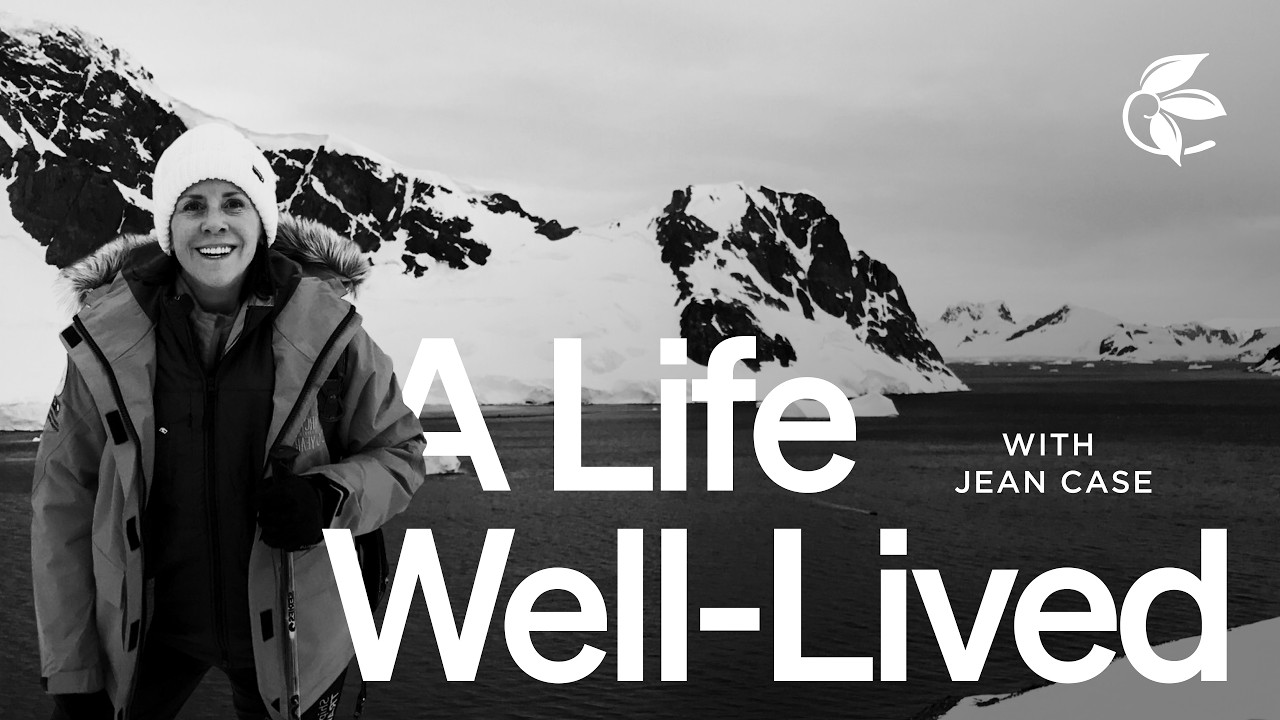
Pioneering tech executive, philanthropist, bestselling author and Chair of the National Geographic Society, Jean Case brings a rare blend of vision, optimism and audacity to every chapter of her life. From her early leap into the startup world at AOL to decades of social impact with The Case Foundation, she has built a career defined by courage, curiosity and a fearless belief in possibility.
In this episode of A Life Well-Lived, Jean reflects on the risks that shaped her path, the lessons she has learned from failure, and the importance of creating opportunity for others. It is a conversation about what it means to live boldly: to make big bets, embrace the unknown and use your platform for good.
Listen on: YouTube · Spotify · Apple Podcasts
A career that began with a setback
Jean shares that AOL was actually her third online business, and that it all began with a failure. She was working for President Reagan when a threatened government shutdown put her pay on hold. With rent and a car payment due, sitting tight at home was not an option, so she took a temporary job down the road at The Source, the first online service in the world. She fell in love with the vision, went on to help start an online service at GE, and was then recruited by a tiny startup that would become AOL.
Leaving GE was a far bigger risk than it looked. In the 1980s it was the number one company in the world, the equivalent of Google today, and for someone from a very middle-class background, landing there felt extraordinary. Some of her friends were horrified when she left for a tiny startup. She believed with all her heart that the startup had more potential to change the world, and she was right.
Two stories from those early AOL years stay with her. A group of women in the Quilters Forum, scattered across the country, collaborated online to make a single quilt and presented it to the company, proof that the dream of connecting communities was really happening. And one night, when the service went down for several hours on the same evening that evidence of water on Mars was announced, the top story on the news was not Mars. It was that AOL was down.
Nothing transformational happens in the comfort zone
Jean’s bestselling book, Be Fearless, grew out of seven years of research through the Case Foundation. Traveling the world, she noticed that almost everyone had an idea for a better future, but only some acted on it, and fewer still created real breakthroughs. A team of social scientists studied transformational change across industries, geographies and history, and the patterns they found became the book’s five principles, among them “Make a Big Bet,” “Be Bold, Take Risks” and “Learn Fast.”
“One thing that became very clear through our research is that nothing transformational happens inside the comfort zone. The comfort zone feels good. It’s a pleasant place to spend time. But it’s rarely where breakthroughs happen.”
What I found most disarming is that Jean would never describe herself as fearless. She often feels fear and insecurity going into new situations. What she has learned is the discipline of moving through it, because something good is usually waiting on the other side.
Learn fast, and start
The transformational leaders her research studied were not necessarily smarter than everyone else. They simply learned faster: they tested ideas, gathered feedback, adjusted and kept moving. Too many people, she says, spend years perfecting a plan instead of acting, and certainty usually comes after action, not before it.
“People often wait for the perfect plan, the perfect moment, or the perfect set of circumstances. The truth is that those things rarely arrive. Most meaningful progress begins with a first step.”
Exploration, storytelling and optimism
Chairing the National Geographic Society, which has been inspiring people for more than 135 years, is one of the great privileges of Jean’s life. Many people know the magazine and the television programming, but at heart it is a nonprofit supporting explorers, scientists, photographers and educators around the world. The trait they share, she says, is curiosity, and explorers and entrepreneurs have a great deal in common: both venture into the unknown, challenge conventional thinking and need resilience. Through her work with the Smithsonian American Women’s History Museum, she is also helping make sure more women’s stories are told.
Her travels have taught her that people everywhere are remarkably similar. They want opportunity, security, a better future for their children, and to feel connected and valued. That is where her optimism comes from.
“Optimism doesn’t mean ignoring problems. It means believing that solutions are possible. Without optimism, it’s very difficult to create change because change requires the belief that tomorrow can be better than today.”
Leadership as service
When she and Steve created the Case Foundation, the idea was to bring the lessons of business and entrepreneurship to philanthropy: backing new ideas, supporting entrepreneurs and accelerating solutions to big challenges. Long before impact investing was mainstream, they were making the case that financial returns and social impact need not be mutually exclusive. Her view of leadership follows the same thread.
“Leadership is much less about having all the answers and much more about creating the conditions for others to succeed. Great leaders listen. They ask questions. They empower people.”

Three things I took from our conversation
- Being fearless is not the absence of fear. It is the discipline of moving through it.
- Make a big bet. Incremental improvement is safe and often praised, but transformation requires stepping outside the comfort zone.
- Start before you are ready. Action creates momentum, momentum creates learning, and learning creates progress.
A life well-lived
Asked what she is most proud of, Jean did not hesitate: the people, the relationships and the partnerships. For her, a life well-lived is filled with purpose, curiosity, relationships and contribution. It does not require perfection, she told me. It requires engagement: showing up, participating and making the most of the opportunities you are given.
Thank you, Jean, for your time, your candor and your unwavering belief in people and their ability to create positive change.
Full transcript
Read the full transcript here
James: In this episode, I have the pleasure of speaking with Jean Case, whose career spans business, philanthropy, and social impact. With nearly two decades in the private sector, including as a senior executive at AOL during its explosive growth, Jean went on to co-found the Case Foundation with her husband, Steve, in 1997. Since then, she has been a pioneer in impact investing, a national voice for social innovation, and a champion of entrepreneurship and civic engagement. Today, Jean serves as CEO of the Case Foundation and Case Impact Network, Chair of the National Geographic Society, and sits on the boards of the Smithsonian American Women’s History Museum and the White House Historical Association. She is also the bestselling author of Be Fearless, a bold call to action for anyone looking to make a difference. Jean, welcome to the podcast. We’re very excited to have you.
Jean: Thanks, James. I’ve really been looking forward to being here and spending time with you.
James: You’ve worn many hats in your life—philanthropist, leader, investor, and even winery owner. When you meet someone new, how do you introduce yourself?
Jean: I say my name just like everyone else. “Hi, I’m Jean.” I don’t always include “Case,” depending on the environment. Context matters, too. If I’m attending a conference or have a particular purpose for being there, I may introduce myself by saying, “Hi, I’m Jean. I’m Chair of National Geographic,” simply to provide context for why I’m there. But in more casual environments, I never use titles.
James: Many people know you as Chair of the National Geographic Society, but you started your career in the early days of technology and took a chance on what was then a relatively unknown startup that became AOL. What drew you to the technology world and that business at the time?
Jean: It’s a story I particularly love telling young people because AOL was actually my third online business. I worked for the first online service in the world, called The Source. I’d love to sit here and pretend I was smart enough to see the vision from the beginning, but the truth is it came out of a failure. I had been working for President Reagan when the government went through one of its threatened shutdowns. Funding for my position was going to be temporarily cut off. Like everyone else, I was young. I had rent to pay. I had a car payment. My supervisors told me, “Jean, it’s all good. Just sit tight at home for a while. We’re sure the funding will come back.” I thought, “Who can sit tight? I have bills to pay. If I’m not getting a paycheck here, I need to get one somewhere else.” As luck would have it, the first online service in the world happened to be right down the road and needed help with a national gathering they were organizing. I went over as a temporary employee, fully expecting to return to work for President Reagan. Instead, I fell in love with the vision. I believed completely in the future of the technology. From there, I went to GE to help start an online service and was eventually recruited by a tiny startup that would become AOL.
James: We’ll talk about Be Fearless in a moment, but did you have a sense at the time of the risk involved in leaving GE for a startup?
Jean: Absolutely. You have to remember this was the 1980s. GE was the number one company in the world. Everyone wanted to work there. Think of it today as being something like Google or one of the hottest companies on the planet. When I landed there, I couldn’t believe it. My background was very middle class. There was nothing about my early life that would have led people to predict I’d end up with a significant role at GE. So it was actually a much bigger risk than it may have appeared on the surface. I had what many people spend their careers trying to achieve, and I chose to leave it. Some of my friends were horrified when I told them I was going to a tiny startup. But I believed with all my heart that the startup had more potential to change the world than the large company I was leaving behind. And it turned out to be true.
James: Those were the early days, weren’t they? Did you have any sense at the time of what AOL could become and the impact it would have?
Jean: No question. By that point, I was already a major believer in the vision of using technology to empower people and democratize access to ideas, information, and communication. All of the things we experience every day now were simply not available to most people back then.
James: What were some of the experiences you had during those early AOL years that shaped your perspective?
Jean: I’ll tell you about a couple of experiences that helped me understand the impact of what we were building. One is a sweet and humble story. We had something called the Quilters Forum. It was made up mostly of women from communities all over the United States who shared quilting patterns and ideas online. Eventually, they decided to create a single quilt together as a collaborative project. Today that may not sound remarkable, but at the time people simply weren’t connected in those ways. It was genuinely innovative. They eventually brought the finished quilt to AOL and presented it to us. For all of us, it was one of those moments when we realized our dream of bringing communities together was actually happening. It was a very simple but powerful example of what technology could do. Then there was a completely different experience. One night, our system went down for several hours. That same evening, the news reported evidence of water on Mars. As someone with a strong geek side, I thought, “Water on Mars? That’s headline news.” Except it wasn’t the top story. The top story was that AOL was down. That’s when we realized we had reached a completely different level of impact.
James: That’s incredible. Risk has clearly been a theme throughout your life, and it eventually led to your book Be Fearless. The book is really a rallying cry for bold leadership and taking action instead of waiting for perfect conditions. Talk a little about what inspired you to write it.
Jean: The book was the result of seven years of research. Through the Case Foundation, I traveled all over the world and met people from every type of community, sector, and background. What I noticed was that almost everyone had a vision of a better future or an idea for how things could be improved. That led us to a fundamental question: Why do some people act on those ideas while others don’t? And when people do act, why do some create real breakthroughs while others fall short? We hired a team of social scientists and began studying transformational change across industries, geographies, and periods of history. We wanted to understand what was present when major breakthroughs occurred. The patterns became remarkably clear. Those patterns eventually became the five principles outlined in Be Fearless. The book is rooted in social science and evidence. For years, I shared those principles with businesses, nonprofit organizations, and governments around the world. Time and again people told me, “More people need access to this message. You should write a book.” That’s why the book exists today.
James: Talk a little about those five principles.
Jean: They’re deeply connected to risk. It’s funny because whenever I speak to large audiences about taking risks, you can actually see people become uncomfortable. They shift in their seats. They look down. You can see the resistance. The first principle is “Make a Big Bet.” Making a big bet requires you to stop thinking incrementally. James, you’re doing that here at Exclusive Resorts. It would be very easy to say, “We’ve got a good thing going. Let’s simply do more of it and make small improvements.” And in many environments, you’d be praised for that. But you’re aiming for something bigger. You’re trying to create transformational impact. That’s what making a big bet is all about. The challenge is that transformational change requires stepping outside your comfort zone. One thing that became very clear through our research is that nothing transformational happens inside the comfort zone. The comfort zone feels good. It’s a pleasant place to spend time. But it’s rarely where breakthroughs happen.
James: I love that. One thing I often tell younger people in our organization is that if they can do something every day that pushes them outside their comfort zone, they’ll grow, we’ll grow, and we’ll all learn. One idea from the book that resonates with me is your belief that being fearless doesn’t mean the absence of fear. It’s about pushing through it.
Jean: Exactly. I’m actually a good spokesperson for that idea because I would never describe myself as fearless. Even though I’ve taken risks throughout my career, I often feel fear and insecurity going into new situations. What I’ve learned is the discipline of moving through that fear. If you can push through it, you’ll often find that something very good is waiting on the other side. And failure is a huge part of that journey.
James: Let’s talk about failure because that’s another idea you emphasize in Be Fearless. Most people try to avoid failure, but you’ve argued that it’s actually an essential ingredient in innovation and progress.
Jean: Absolutely. One of the principles in the book is “Learn Fast.” When we studied transformational leaders and breakthrough organizations, we found they weren’t necessarily smarter than everyone else. They simply learned faster. They tested ideas. They gathered feedback. They adjusted. And they kept moving. Too many people spend years trying to create the perfect plan before taking action. The reality is that perfection rarely exists. The people who create meaningful change are usually willing to start before they have all the answers. They understand that learning happens through action.
James: That’s a difficult lesson for a lot of people.
Jean: It is. We’re often taught that mistakes are something to avoid. But when you look at entrepreneurship, innovation, science, or even personal growth, mistakes are often where the greatest learning occurs. The key is not failing for the sake of failing. The key is learning from what didn’t work and using that information to improve. That’s what allows progress to happen.
James: Another principle is “Be Bold, Take Risks.” That seems to connect directly to your own journey.
Jean: It does. Every major turning point in my life involved uncertainty. Leaving government. Leaving GE. Joining AOL. Starting the Case Foundation. Writing a book. Taking on leadership roles that felt bigger than my experience at the time. None of those decisions came with guarantees. But I’ve learned that growth rarely happens when everything feels completely safe. Sometimes you have to take a step forward before you can see the entire path.
James: One thing that stands out about your career is that you’ve consistently moved toward opportunities that allow you to have greater impact. Was that intentional?
Jean: Very much so. I’ve always been motivated by purpose. I enjoy building things. I enjoy solving problems. But what excites me most is the opportunity to create positive change. That’s what drew me to technology. It’s what drew me to philanthropy. It’s what continues to inspire me today. When you find work that aligns with both your skills and your values, it creates a powerful sense of purpose.
James: You’ve spent decades working at the intersection of business and social impact. Do you think those worlds are becoming more connected?
Jean: Without question. One of the most exciting developments I’ve seen is the rise of entrepreneurs and investors who understand that financial returns and social impact don’t have to be mutually exclusive. When we started talking about impact investing years ago, many people viewed it as a niche concept. Today, it’s becoming much more mainstream. People increasingly recognize that businesses can be a force for good while still creating value. That’s a very encouraging trend.
James: You mentioned earlier that your work has taken you all over the world. What have those experiences taught you about people?
Jean: More than anything, they’ve taught me that people are remarkably similar. We often focus on our differences, but when you spend time in communities around the world, you realize that most people want many of the same things. They want opportunity. They want security. They want a better future for their children. They want to feel connected and valued. That realization gives you a tremendous amount of hope.
James: That’s a powerful observation.
Jean: It really is. And it’s one of the reasons I remain optimistic. When you spend your life meeting entrepreneurs, innovators, community leaders, and problem-solvers, you see extraordinary examples of human potential. You see people tackling difficult challenges every day. That gives you confidence that progress is possible.
James: Optimism seems to be a recurring theme in your life.
Jean: I think optimism is incredibly important. Optimism doesn’t mean ignoring problems. It means believing that solutions are possible. It means believing that people have the ability to improve things. Without optimism, it’s very difficult to create change because change requires the belief that tomorrow can be better than today.
James: One of the roles you’ve held that fascinates me is your position as Chair of the National Geographic Society. For many people, National Geographic represents exploration, discovery, and storytelling at the highest level. What has that experience meant to you?
Jean: It’s been one of the greatest privileges of my life. National Geographic has been inspiring people for more than 135 years. When most people think about National Geographic, they think about the magazine or the television programming. What many don’t realize is that we’re fundamentally a nonprofit organization focused on exploration, science, education, and storytelling. Every year, we support explorers, researchers, scientists, photographers, and educators who are working all over the world. These are people helping us better understand our planet and the challenges we face. Being part of that mission is incredibly inspiring.
James: You’ve had the opportunity to meet some remarkable explorers and innovators through that work. What stands out to you about them?
Jean: Curiosity. It’s probably the most consistent characteristic. The people who dedicate their lives to exploration are endlessly curious. They’re constantly asking questions. They’re willing to go places other people won’t go. They’re willing to pursue ideas other people might dismiss. That curiosity often leads to discovery. And discovery often leads to progress.
James: That sounds very connected to entrepreneurship.
Jean: It is. Entrepreneurs and explorers have a lot in common. Both are willing to venture into the unknown. Both are willing to take risks. Both are willing to challenge conventional thinking. And both have to develop resilience because the path is rarely straightforward.
James: You also serve on the board of the Smithsonian American Women’s History Museum. That feels like another mission rooted in storytelling.
Jean: Absolutely. Stories shape culture. Stories shape how we understand ourselves and our history. One of the things that’s been incredibly rewarding about the museum is helping ensure that more women’s stories are told and preserved. There are so many extraordinary women whose contributions have helped shape our country and our world. Many of those stories have not received the attention they deserve. Helping bring those stories to light is important work.
James: When you think about the women who inspired you throughout your life, who comes to mind?
Jean: There are many. Some are public figures. Some are mentors. But honestly, many of the women who inspired me were everyday people. Women who demonstrated resilience. Women who worked hard. Women who balanced family, career, and community responsibilities. I’ve always believed inspiration comes in many forms. You don’t have to be famous to make a meaningful impact on someone’s life.
James: You’ve spent much of your career helping others achieve their potential. What have you learned about leadership?
Jean: Leadership is much less about having all the answers and much more about creating the conditions for others to succeed. Great leaders listen. They ask questions. They empower people. They create environments where ideas can flourish. And they understand that leadership is ultimately about service. The best leaders I’ve encountered are focused less on themselves and more on helping others succeed.
James: That’s a perspective we don’t hear often enough.
Jean: I think it’s true. Leadership is sometimes portrayed as being the person at the front of the room with all the answers. But in my experience, the most effective leaders are often the people asking the best questions. They’re the people bringing together talented individuals and helping them do their best work. That’s where real impact happens.
James: When you look at the next generation of leaders, what gives you hope?
Jean: Their willingness to challenge assumptions. Young people today are asking important questions. They’re questioning systems. They’re looking for new approaches to old problems. They’re incredibly entrepreneurial. And they’re often much more globally connected than previous generations. Those qualities give me tremendous optimism about the future.
James: You’ve spoken about leadership, exploration, and impact. I’d love to talk about philanthropy for a moment. You and Steve created the Case Foundation nearly three decades ago. What was the original vision?
Jean: The vision was actually very simple. We believed that philanthropy could be a powerful force for innovation and change. At the time, a lot of philanthropy focused on maintaining existing programs and institutions, which is important work. But we were particularly interested in identifying new ideas, supporting entrepreneurs, and helping accelerate solutions to big challenges. We wanted to take some of the lessons we’d learned from business and entrepreneurship and apply them to philanthropy. That mindset continues to guide our work today.
James: One of the themes that comes through in everything you do is the idea of possibility. You seem genuinely optimistic about what people can accomplish.
Jean: I am. I’ve spent my career around people who are building things. Entrepreneurs. Scientists. Explorers. Innovators. Community leaders. When you’re around those kinds of people, you see what’s possible. You see individuals taking on enormous challenges and making real progress. That doesn’t mean every effort succeeds. But it does mean that people have far more capacity to create change than they often realize.
James: How important has partnership been throughout your journey?
Jean: Incredibly important. Nobody accomplishes meaningful things entirely on their own. Partnerships matter. Relationships matter. Collaboration matters. That’s true in business, philanthropy, government, and life. One of the lessons I’ve learned is that when people come together around a shared purpose, extraordinary things can happen.
James: You and Steve have built a remarkable life together. How has that partnership influenced your work?
Jean: In countless ways. We’ve always shared a belief in entrepreneurship, innovation, and the power of individuals to create change. We’ve also shared a deep sense of curiosity. We’re both constantly learning, exploring, and asking questions. That creates a wonderful foundation for both a marriage and a partnership. We’ve been able to support one another while also pursuing a shared mission. That’s been a tremendous gift.
James: You mentioned curiosity earlier. It seems to appear in almost every chapter of your life.
Jean: I think curiosity is one of the most important qualities a person can develop. Curiosity keeps you learning. It keeps you growing. It keeps you open to new ideas and new possibilities. The moment we stop being curious, we stop expanding our understanding of the world. And that’s true whether you’re twenty-five or seventy-five.
James: Travel has also played a major role in your life. How has it shaped you?
Jean: Travel broadens perspective in ways few other experiences can. When you visit different places, meet different people, and experience different cultures, you’re reminded that there are many ways to see the world. Travel builds empathy. It builds understanding. It challenges assumptions. Some of the most important lessons I’ve learned have come while traveling and listening to people whose experiences were very different from my own.
James: That’s something we believe deeply at Exclusive Resorts. Travel has a unique ability to change how people think.
Jean: I completely agree. Travel often creates the conditions for transformation. You step away from your routines. You encounter new ideas. You become more present. You start asking different questions. Those experiences can stay with you for the rest of your life.
James: When you reflect on everything you’ve accomplished—from technology to philanthropy, investing, publishing, and leadership—what are you most proud of?
Jean: The people. Without question. The relationships. The partnerships. The people we’ve been able to support. The people we’ve learned from. The people we’ve worked alongside. Achievements matter, but people matter more. When I look back, the most meaningful moments almost always involve people.
James: That’s a beautiful answer.
Jean: It’s an honest one. At the end of the day, relationships are what endure. They’re what give life meaning. And they’re often what make the biggest difference in the world.
James: As you reflect on your journey, what advice would you give to someone who wants to create meaningful change but isn’t quite sure where to begin?
Jean: Start. That’s probably the most important advice I can give. People often wait for the perfect plan, the perfect moment, or the perfect set of circumstances. The truth is that those things rarely arrive. Most meaningful progress begins with a first step. You don’t need to have everything figured out. You simply need to begin. As you move forward, you’ll learn, adapt, and discover opportunities that weren’t visible when you started.
James: That feels very consistent with the principles in Be Fearless.
Jean: It is. Action creates momentum. Momentum creates learning. Learning creates progress. One of the biggest barriers people face is the belief that they need certainty before they act. In reality, certainty often comes after action, not before it.
James: When you think about the future, what excites you most?
Jean: People. I know that answer may sound repetitive, but it’s true. I’m excited by the entrepreneurs who are creating new solutions. I’m excited by young leaders who are challenging assumptions. I’m excited by scientists, educators, explorers, and innovators who are tackling some of the world’s biggest challenges. Every generation brings new energy and new ideas. That’s something worth celebrating.
James: You’ve remained remarkably optimistic throughout your career. Where does that optimism come from?
Jean: It comes from experience. I’ve seen what people can accomplish when they’re given opportunity and support. I’ve seen communities come together to solve difficult problems. I’ve seen innovations that once seemed impossible become reality. When you’ve witnessed those things repeatedly, it’s hard not to be optimistic. That doesn’t mean I ignore challenges. It simply means I believe challenges can be addressed.
James: How do you define success today?
Jean: Success has evolved over time. Earlier in my career, success was often tied to accomplishments, milestones, and professional growth. Today, success feels much more connected to impact. Did I help create opportunity? Did I support people who are making a difference? Did I contribute to something larger than myself? Those are the questions I think about now.
James: And how do you define a life well-lived?
Jean: A life well-lived is one that’s filled with purpose, curiosity, relationships, and contribution. It’s about continuing to learn. It’s about staying open to possibility. It’s about helping others along the way. And it’s about having the courage to pursue ideas that matter to you. I don’t think a life well-lived requires perfection. I think it requires engagement. It requires showing up, participating, and making the most of the opportunities you’re given.
James: That’s a wonderful definition. Jean, thank you for joining us today. You’ve built an extraordinary career across business, philanthropy, investing, and leadership, but what stands out most is your unwavering belief in people and their ability to create positive change. It’s been a pleasure spending this time with you.
Jean: Thank you, James. I’ve really enjoyed the conversation. And thank you for creating a platform that allows people to share their stories. I think stories are one of the most powerful ways we learn from one another.
James: I couldn’t agree more. Thank you for joining us for this episode of A Life Well-Lived. We’ll see you next time.
A Life Well-Lived is the podcast from Exclusive Resorts, featuring the extraordinary lives of our Members and friends of the Club. Watch the full episode on YouTube, or listen on Spotify and Apple Podcasts.
Enjoyed this? Get new stories by email.
Travel, cars, aviation and conversations from A Life Well-Lived, delivered when each new post is published.
Related Posts
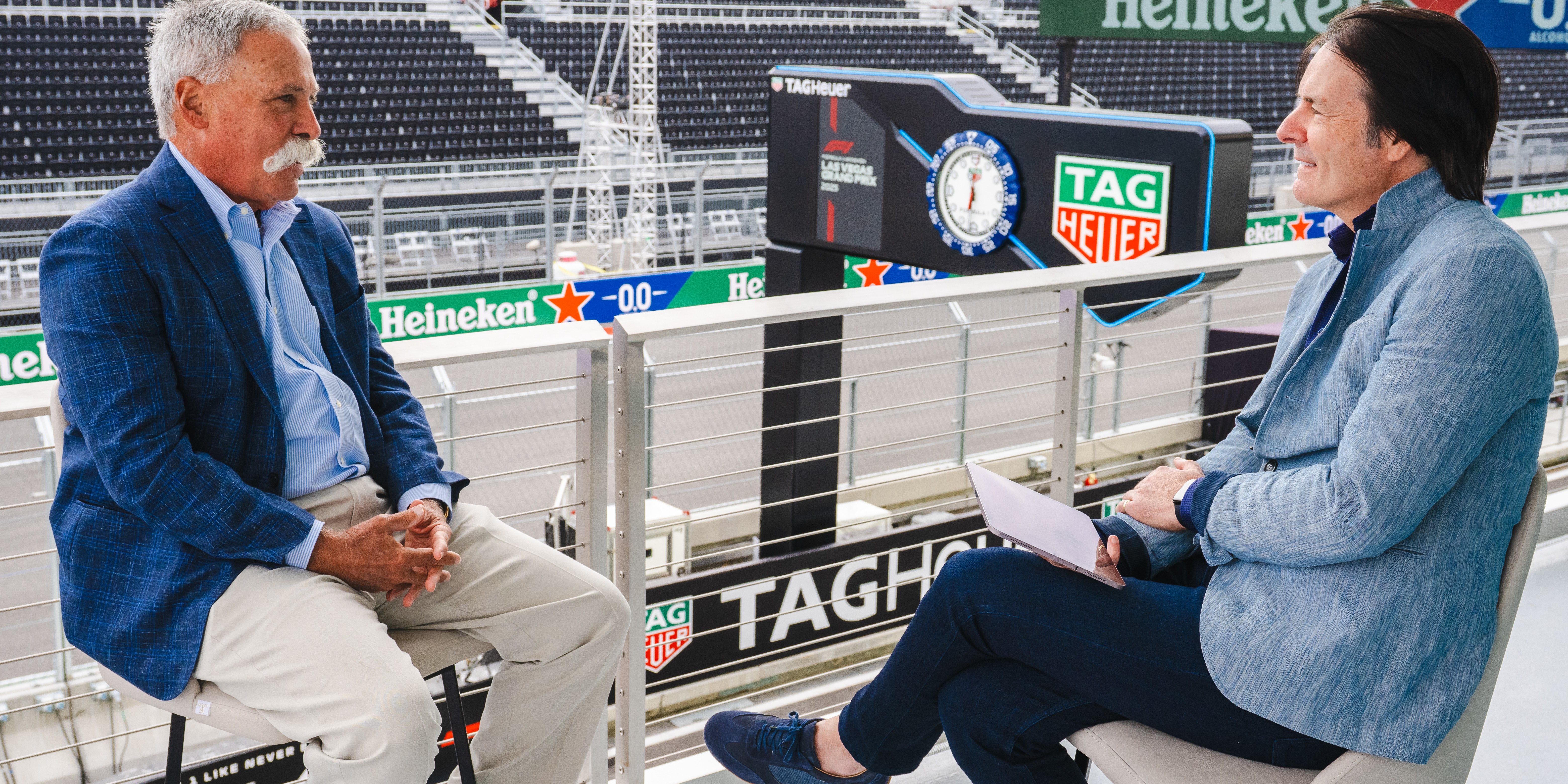
A Life Well-Lived: Chase Carey on Building Formula 1 into a Global Powerhouse
Recorded live at the Las Vegas Grand…

A Life Well-Lived: Dick Monfort on Ownership, Stewardship and the Colorado Rockies
At Coors Field with Colorado Rockies…

A Life Well-Lived: Tish Squillaro on Candor, Head Trash and Getting Out of Your Own Way
Executive coach, author and Club Member…