
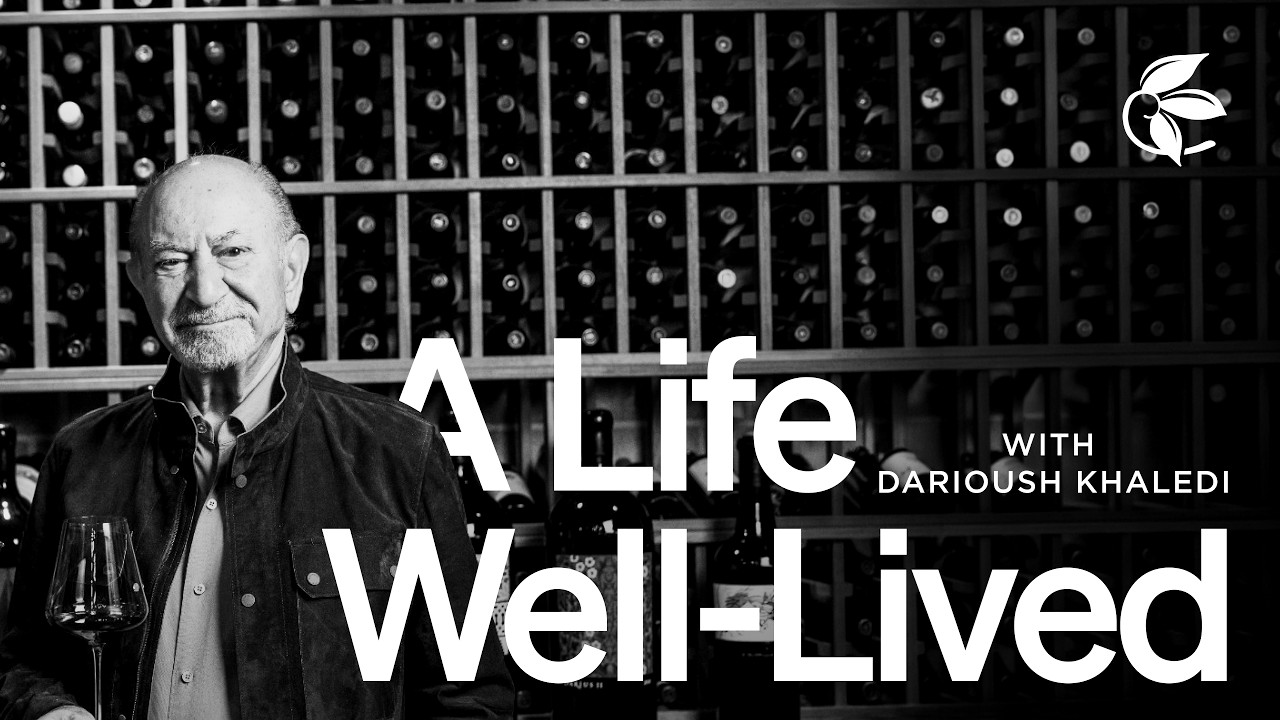
I recorded this episode of A Life Well-Lived in Darioush Khaledi’s private cellar, down in the basement of Darioush Winery in Napa Valley. The barrels sit just outside, you can smell the wine and the oak, and there is a calm down there that suits the man perfectly.
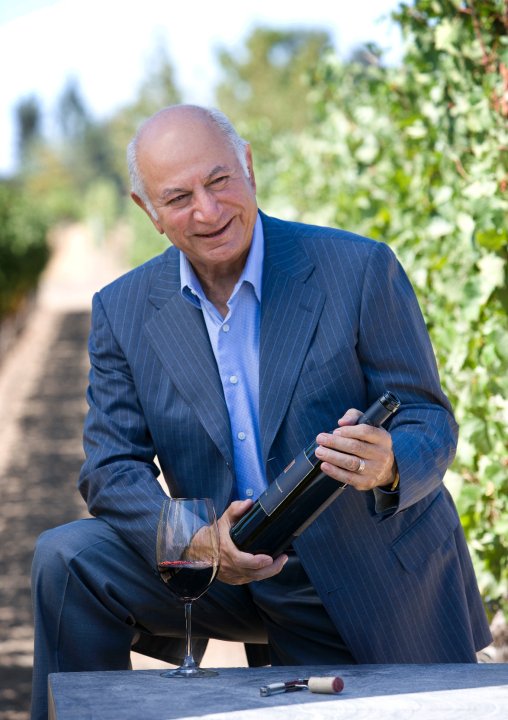
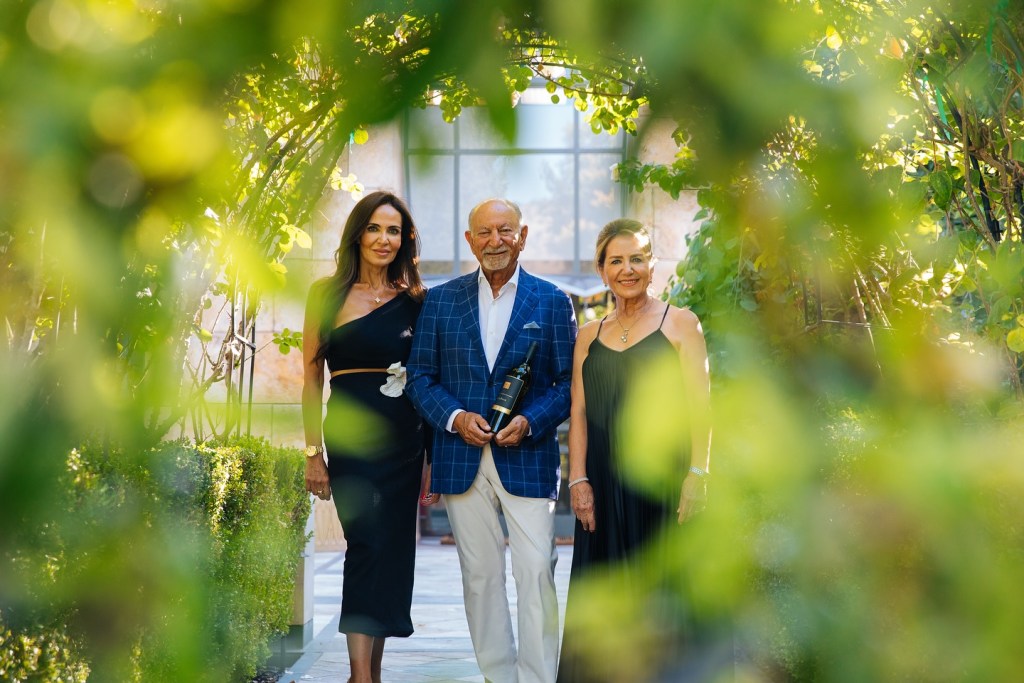
Darioush has been a Member of the Club since 2021. From a boyhood in Shiraz to building Southern California’s largest family-owned grocery business, his story is rooted in hard work and a belief in the boundless possibility of the American dream. With his wife, Shahpar, by his side, he founded Darioush Winery to honor his Persian heritage while embracing the opportunity and optimism he found in his adopted home.
For Darioush, business, whether in construction, groceries or wine, has always been about people. In our conversation he reflects on the values that have defined his path: hospitality, humility, cultural pride and a deep sense of responsibility to give back.
Listen on: YouTube · Spotify · Apple Podcasts
A towel dipped in wine
Darioush’s father was in the military, so the family moved often, between Shiraz, Isfahan and Tehran. Shiraz has a rich wine culture, and his father made wine at home for family and friends. One of Darioush’s earliest memories is from the age of about six: he crept into his father’s cellar, could not reach the large clay vessel that smelled so wonderful, so he dipped a towel into it and sucked on the towel. It was his first taste of wine.
November 6, 1968 is a date he will never forget. That morning he received his master’s degree in civil engineering. The same day, he and two classmates formed their construction company. And that evening, he and Shahpar were married.
Iran was modernizing fast, and the company grew quickly. By the time he left the country it had around twenty sites running at once, from the Persian Gulf in the south to the Caspian Sea in the north. He worked twenty-six days a month, travelling between them at night in a Range Rover with two drivers, and was home for only four.
A second beginning
In December 1976 Darioush and Shahpar visited California, and he fell in love with it almost immediately. Within a week they had bought a home in Palos Verdes. To help secure permanent residency, he bought a small supermarket in Torrance, never imagining he would one day work in it. Then came the Revolution. Because his construction company worked on government projects, the new regime took over the business and its assets. Overnight, the carpet was pulled out from under them.
“When I left Iran, I lost everything materially. But America gave me the opportunity to start over.”
So he learned the grocery business from the bottom. He pushed shopping carts, worked the check stands and stocked shelves, while learning English, which was his third language after Farsi and French. He noticed that many of his customers were of Mexican heritage and were crossing the street to a small family market for the products they could not find in his store. The market would not tell him its supplier, so he arrived early the next morning, waited for the delivery truck and wrote down the company’s details. Within a few months his sales had doubled. The lesson stayed with him for life: listen to your customers, and they will tell you exactly what they need.
Over the next twenty-five years that one store became forty-one, the largest privately held family-owned grocery chain in Southern California.
Employees are the first customers
What has always struck me about Darioush’s grocery business is the loyalty of his people, many of whom stayed with him for decades. His philosophy is simple. Many companies put customers first; he believed his employees were his first customers. If they were happy, respected and appreciated, they would create a better experience for everyone who walked through the door. He promoted from within, celebrated achievements and shared ownership with many of his team, because, as he puts it, when people have ownership they think differently and they care differently.

From success to significance
Darioush has received the Ellis Island Medal of Honor, which recognizes immigrants who have contributed to American life while preserving their cultural heritage. He sees it as recognition for his family and his employees as much as for himself. But as he has grown older, he has become less interested in success than in something else.
“Success is often measured by numbers. Significance is about impact. How many lives did you improve? How many opportunities did you create?”
Hospitality to rival the world’s finest hotels
Wine had never left him. When Darioush and Shahpar came to Napa Valley to celebrate their twentieth wedding anniversary, they fell in love with the valley, but he felt the hospitality did not match the scenery. Many tasting rooms, he told Shahpar, felt more like a roadside motel than a great hotel. If they ever opened a winery, he wanted it to be measured against the very finest hotels in the world.
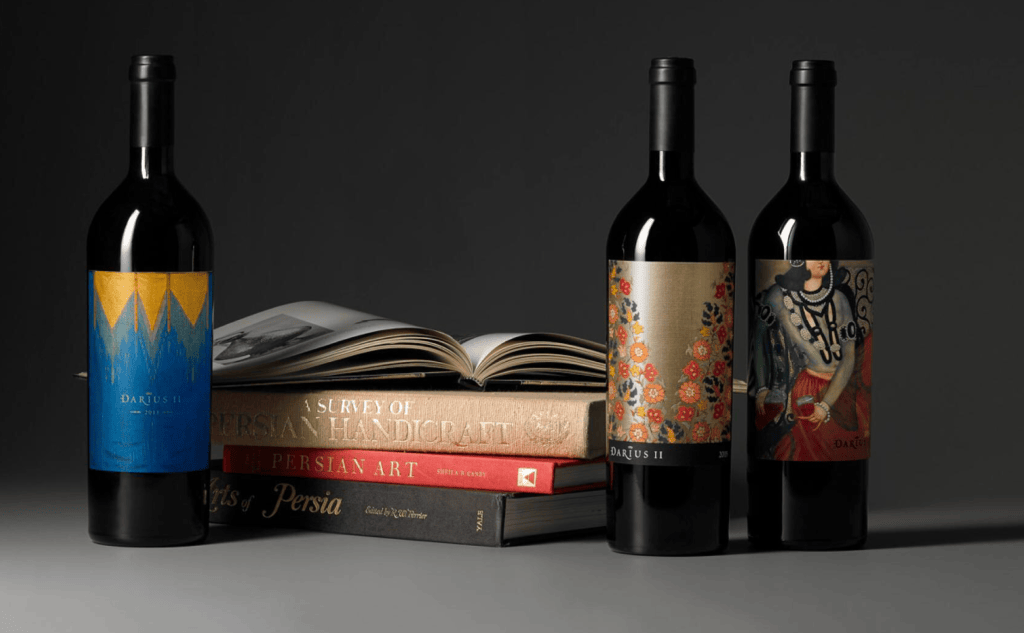
That idea is rooted in Taarof, the Persian tradition of hospitality that puts the guest first, and it is captured in the bronze statue with open hands that greets every visitor to the winery. When Darioush was a child, whoever knocked on the door was welcomed into the home, even strangers. It is, he says, part of the Persian DNA.
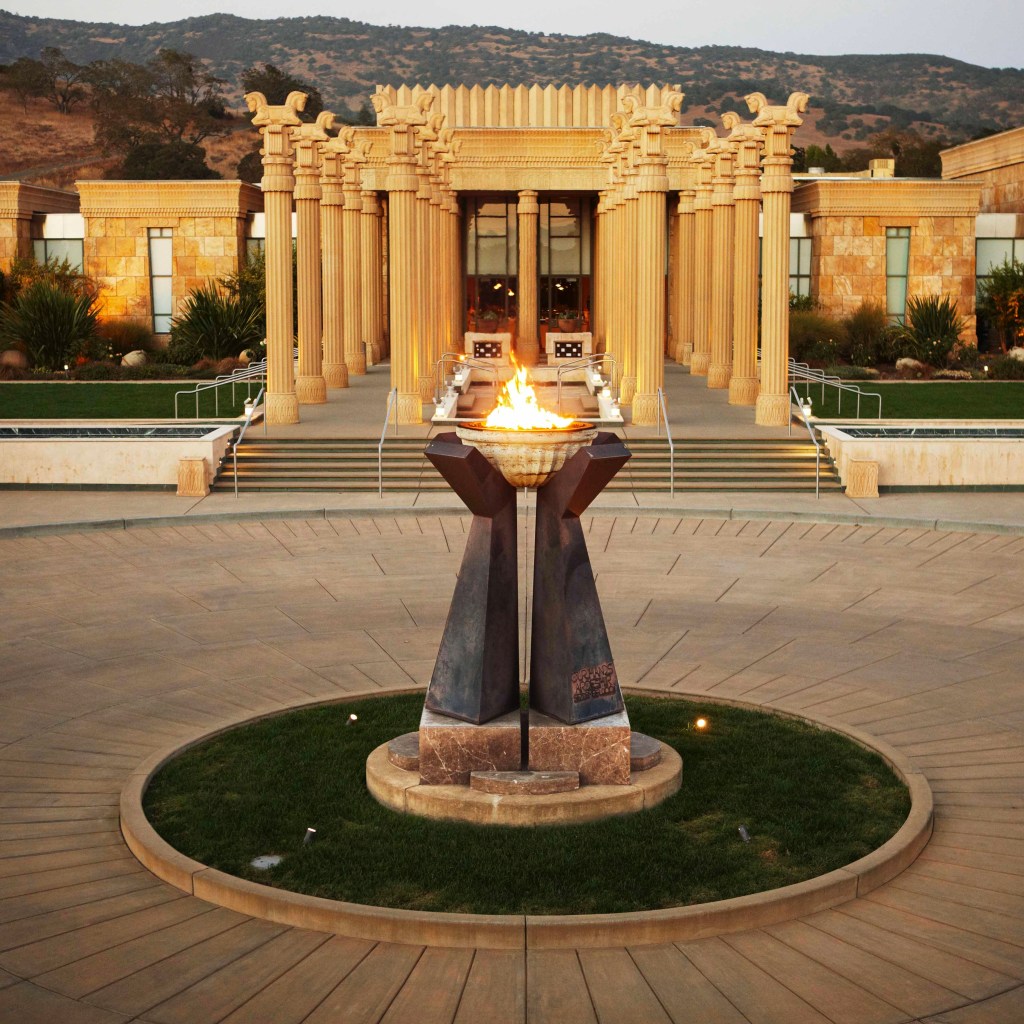
Before he built anything, he spent years learning: visiting wineries around the world, meeting winemakers and studying vineyards. The winery’s architecture draws on Persepolis, the great ceremonial capital of ancient Persia, as a tribute to his heritage. For its first four years it operated out of double-wide trailers while construction was under way, beautifully landscaped so that most guests never realized, and even then it had a full-time concierge. Today five people work in concierge services alone, booking restaurants, hotels and whole itineraries for guests. This year the winery celebrates its twenty-fifth anniversary.
“Hospitality is not about serving food or pouring wine. It’s about making people feel valued. It’s about making them feel seen.”
Family is different
Shahpar has been Darioush’s partner for more than fifty years, and he insists that whatever success people attribute to him belongs to them both. Their children are now involved in the winery too, which he sees not as a company but as part of the family’s story. Together they support Festival Napa Valley and education causes, out of a deep sense of gratitude for what they have been given.
“A business can be sold. A building can be replaced. Money comes and goes. Family is different.”
Three things I took from our conversation
- Listen to your customers. A few early mornings watching a delivery truck doubled the sales of his first store.
- Look after your people first. Treat employees as your first customers, and they will look after everyone else.
- Stay open to what setbacks bring. Losing everything in Iran led him to America, America led him to groceries, and groceries eventually led him to Napa Valley.
“Some of the most important opportunities in my life came disguised as setbacks.”
A life well-lived
When I asked Darioush for his advice to young entrepreneurs, he said simply: be patient. Success is rarely a straight line; it is usually a series of lessons. And when I asked what he hopes people take from his story, his answer came back, as it so often does with him, to people: that life is about relationships, generosity, and treating others with kindness and respect.
Thank you, Darioush, and thank you, Shahpar, for welcoming me into your cellar and for sharing a remarkable journey, from Iran to California, from engineering to groceries to wine, guided all the way by hospitality, family and gratitude.
Full transcript
Read the full transcript here
James: Today, I have the pleasure of speaking with Darioush Khaledi, a visionary entrepreneur and Member of the Club since 2021. Born in Iran and trained as a civil engineer, Darioush built one of California’s largest family-owned grocery businesses before following his passion for wine. As the founder of Darioush Winery, he has blended Persian heritage with Napa Valley craftsmanship, creating a winery that is as much about hospitality as it is about exceptional wines. We’ll explore his remarkable journey, his philosophy on business and community, and the art of bringing people together. So, we’re sitting here in the Darioush Winery in Napa Valley. We’re in this fantastic room, Darioush’s private cellar. We just walked down into the basement of the winery, and there’s an incredible feeling down here. It’s very calm and tranquil. We have many of the barrels outside, and you can smell the wine and the oak. It has an incredible atmosphere. One of the things that strikes me when you first arrive at the winery is the bronze statue outside with the open hands. I understand it reflects a Persian concept called Taarof, which is deeply connected to hospitality and making guests feel more welcome than they would in their own homes. Can you explain that concept a little bit?
Darioush: Persians are known for hospitality. In fact, when I was a child, there weren’t many hotels in the city where we lived. Often, guests would arrive whom we had never met before. Whoever knocked on the door was welcomed into the home. That’s part of our DNA. It’s part of Persian culture. When my wife, Shahpar, and I first visited Napa about thirty-three years ago to celebrate our twentieth anniversary, we visited many wineries. The beauty of Napa was extraordinary, but I didn’t feel the hospitality matched the surroundings. The service wasn’t what I hoped it could be. I told Shahpar, “I feel like I’m walking into a Motel 6 when I visit some of these tasting rooms. If we ever open a winery, I want it to feel like a Four Seasons.” That became our vision. This year, we’re celebrating our twenty-fifth anniversary. When we first started, we operated out of double-wide trailers while construction was underway. But even then, we made them beautiful. We landscaped around them and created an environment that felt welcoming. Most visitors never realized they were temporary facilities.
James: So the winery actually started out in trailers?
Darioush: Absolutely. For four years, we operated from double-wide trailers while building the winery. Even then, we had a full-time concierge, which was very unusual at the time. Today, we have five full-time employees dedicated to concierge services. When guests visit, we help with restaurant reservations, hotel reservations, winery recommendations, and travel planning. Some Members simply call and tell us they’re coming to Napa for three days, and we create an itinerary for them. Hospitality has always been at the center of everything we do.
James: I always find that whenever we’re together, you have an incredible sense of calm and gentleness about you. Can you tell me a little about growing up in Iran? This was before the Iranian Revolution. What was life like?
Darioush: My father was in the military, so we moved frequently. I grew up in Shiraz, Isfahan, and Tehran. Shiraz, of course, has a rich wine culture. My father made wine as a hobby for family consumption. It wasn’t commercial—just something he enjoyed. As a child, I watched him make wine. One of my earliest memories is from when I was about six years old. I went into my father’s wine cellar and saw a large clay vessel. Something smelled wonderful inside, but I couldn’t reach it. There was a towel hanging nearby, so I dipped it into the wine and started sucking on the towel. That was my first experience with wine.
James: What a fantastic introduction.
Darioush: Before the Revolution, there were no restrictions on wine consumption. It was very common. My father would often put a little wine into our water at meals. It was a very European approach to family life. Wine was simply part of the culture.
James: November 6, 1968, was a particularly important day for you, wasn’t it?
Darioush: I’ll never forget it. That morning, I received my master’s degree in civil engineering. The same day, two classmates and I officially formed our construction company. And that evening, Shahpar and I got married. All three events happened on the same day. That’s why November 6, 1968, is a date I’ll never forget.
James: So you started your career as a civil engineer in Iran.
Darioush: Yes. Shortly after our wedding, we received our first construction contract and went to work. During the late 1960s and early 1970s, oil prices increased dramatically, and there was tremendous investment flowing into Iran. The Shah was determined to modernize the country and bring it to European standards. As a result, there was no shortage of construction opportunities. Our company grew rapidly. By the time I left Iran, we had approximately twenty active construction sites spread across the country, from the Persian Gulf in the south to the Caspian Sea in the north.
James: Twenty sites at the same time?
Darioush: Twenty sites. I spent most of my life traveling between them. I had a Range Rover and two drivers. We would drive at night and work during the day. The distance between the southern and northern sites was roughly 3,000 kilometers. I was constantly moving. I worked twenty-six days a month and was home only four days.
James: That must have been difficult on your family.
Darioush: It was. My daughter Sally was very young at the time. Whenever I came home, she would almost treat me like a stranger. It would take a few hours for us to reconnect. That was the reality of my life then.
James: You had built a successful business in Iran, and then you came to the United States for a visit. Tell me about that first trip.
Darioush: Shahpar’s sister was living in Redondo Beach, California, and my brother was a student in Oklahoma. We first stopped in Oklahoma City for a few days. Very quickly, we realized that wasn’t where we wanted to live. So we continued to California and stayed with Shahpar’s sister. That was my first visit to the United States. It was December of 1976.
James: And what were your first impressions?
Darioush: I fell in love with California almost immediately. The day after we arrived, my brother-in-law took me on a tour of the area, including Palos Verdes. I loved it. Within a week, we purchased a home in Palos Verdes. We were having a wonderful time when someone reminded us that our tourist visa would expire in six months. That’s when we started exploring options for obtaining permanent residency. One of the ways to accelerate the process at the time was to own a business. So I purchased a small supermarket. At that point, I had no idea that one day I would actually be working in that store.
James: You bought it primarily as an immigration strategy?
Darioush: Exactly. I never imagined it would become my livelihood. But shortly afterward, the Iranian Revolution happened. As unrest increased, we decided not to return to Iran. Then the Revolution took place, and everything changed. Because our construction company worked on government projects, the new regime took over the business and our assets. Practically everything we had built was gone. Overnight, the carpet was pulled out from under us. Suddenly, I found myself starting over.
James: That’s an extraordinary shift—from running one of the larger construction companies in Iran to learning the grocery business in Southern California.
Darioush: It truly was. I often tell people that life can change very quickly. One day you’re managing a large construction company with projects all over a country. The next day you’re standing inside a small grocery store trying to figure out how everything works. That’s exactly what happened to me.
James: Tell me about that first grocery store.
Darioush: It was in Torrance. When I began working there, I noticed that many of our customers were of Mexican heritage. Most of our employees, however, were not. I also noticed that customers would buy their traditional American groceries from our store and then cross the street to a small family-owned market that specialized in Mexican products. I became curious. I went across the street and asked where they sourced those products. Naturally, they wouldn’t tell me. So the next morning I arrived early and watched for the delivery truck. When the truck arrived, I wrote down the company information and contacted the supplier directly. Soon we were carrying many of the same products. Within a few months, our sales had doubled.
James: Just from understanding what your customers actually wanted?
Darioush: Exactly. Then I began hiring people from the local community. The more we reflected the community we served, the more successful the business became. That first store taught me one of the most important lessons of my career: Listen to your customers. If you pay attention, they’ll tell you exactly what they need.
James: And that eventually became forty-one stores.
Darioush: Yes. The owner who sold me the first store watched what we were doing and eventually sold us a second store as well. Then we continued growing. Some locations were acquisitions. Others we built from the ground up. Over the next twenty-five years, we expanded to forty-one locations and became the largest privately held family-owned grocery chain in Southern California.
James: That’s an extraordinary achievement.
Darioush: It all started with one small store and a willingness to learn. And I truly did start at the bottom. I pushed shopping carts. I learned how to operate the check stands. I stocked shelves. I wanted to understand every aspect of the business. Remember, when I arrived, English wasn’t my second language—French was. So there was a learning curve. I attended language programs, took classes at USC, and later completed executive education at Cornell. I was constantly learning. That’s how the business grew.
James: One of the things that’s always fascinated me about your grocery business is the loyalty of your employees. You’ve had people stay with you for decades. How did you build that culture?
Darioush: People are everything. I’ve always believed that if you take care of your employees, they’ll take care of your customers. Many companies focus on customers first. I looked at it differently. I believed our employees were our first customers. If they were happy, respected, and appreciated, they would naturally create a better experience for everyone who walked through the door. We worked very hard to create that culture.
James: How did you do that?
Darioush: We listened. We promoted from within whenever possible. We celebrated people’s accomplishments. We created opportunities for advancement. Many of the people who started with us in entry-level positions eventually became managers, district managers, and executives. One of my greatest sources of pride is seeing people build careers and provide better lives for their families because of opportunities they found within our company.
James: You also shared ownership with many employees.
Darioush: We did. I wanted people to feel invested in what we were building together. When people have ownership, they think differently. They care differently. They don’t just show up for a paycheck. They become partners in the success of the organization. That philosophy worked very well for us.
James: At one point, your company was generating billions of dollars in annual revenue. Looking back, what do you think drove that success?
Darioush: I think it was a combination of factors. First, we paid attention to our customers. Second, we hired great people. Third, we adapted. The communities we served were constantly changing. Some neighborhoods became more diverse. Some became younger. Others became older. We paid attention to those changes and adjusted accordingly. Retail is very simple in theory. Give customers what they want, treat them fairly, and make the experience enjoyable. If you do that consistently, good things happen.
James: Was there a point when you realized you had accomplished something truly significant?
Darioush: Not really. I was always focused on the next challenge. When we had one store, I was worried about making that store successful. When we had ten stores, I was focused on those ten. When we had forty-one stores, I was focused on helping them all perform better. I’ve never spent much time looking backward. I’ve always been more interested in what’s next.
James: That seems to be a recurring theme throughout your life.
Darioush: Very much so. I think curiosity keeps people young. The moment you stop learning, stop growing, and stop being curious, life becomes smaller. I’ve always wanted to keep learning. Whether it was construction, retail, wine, hospitality, or philanthropy, I enjoy the process of discovering something new.
James: One of the most meaningful recognitions you’ve received was the Ellis Island Medal of Honor. Tell me about that experience.
Darioush: That was a very special moment. The award recognizes immigrants who have made contributions to American society while preserving and celebrating their cultural heritage. When I received the call, I was deeply honored. America gave me opportunities that changed my life. To be recognized in that way was incredibly meaningful. It wasn’t just recognition for me. It was recognition for my family, for my employees, and for the journey we had all shared together.
James: You often speak very passionately about America.
Darioush: I do. This country gave me a second chance. When I left Iran, I lost everything materially. But America gave me the opportunity to start over. Not every country does that. I’ve always been grateful for the opportunities this country provided. That’s why I believe it’s important for people to contribute to their communities and give back whenever they can.
James: You’ve talked before about the difference between success and significance. What do you mean by that?
Darioush: Success is often measured by numbers. Revenue. Profits. Buildings. Assets. Significance is different. Significance is about impact. How many lives did you improve? How many opportunities did you create? How many people are better off because you were here? As I’ve gotten older, I’ve become much more interested in significance than success.
James: That’s a powerful distinction.
Darioush: I think it’s one of the most important lessons I’ve learned. At the end of your life, people don’t remember your balance sheet. They remember how you treated them. They remember how you made them feel. That’s what matters.
James: At some point, after building this extraordinary grocery business, you found yourself drawn back to wine. How did that happen?
Darioush: In many ways, wine had always been part of my life. As I mentioned earlier, my father made wine when I was growing up. Those memories never left me. Then, in the early 1990s, Shahpar and I came to Napa Valley to celebrate our twentieth wedding anniversary. That trip changed everything. We fell in love with Napa. The beauty of the valley, the vineyards, the mountains, the people—it was unlike anywhere else. I remember telling Shahpar that one day I wanted to make wine here. At the time, it seemed like a dream. We were still deeply involved in the grocery business, and wine was simply a passion. But sometimes passions become something more.
James: Did you immediately start looking for vineyard property?
Darioush: Not immediately. We spent years learning. I visited wineries all over the world. I met winemakers. I studied vineyards. One thing I’ve learned throughout my life is that before you enter a business, you need to understand it. The more I learned, the more convinced I became that if we were going to do this, we needed to do it at the highest possible level. I wasn’t interested in creating just another winery. I wanted to create something meaningful.
James: And eventually you found the property where we’re sitting today.
Darioush: Yes. Finding the site was not easy. We looked at many properties before we found the right one. Location mattered. The vineyard mattered. The visibility mattered. Most importantly, it needed to be a place where we could bring our vision to life. When we found this property, we knew it was special.
James: The architecture is unlike anything else in Napa Valley. Where did the inspiration come from?
Darioush: Ancient Persia. Persian civilization has a rich architectural history that spans thousands of years. When I started thinking about the winery, I wanted it to reflect my heritage. Not in a subtle way. I wanted visitors to immediately understand that this was different. The inspiration came from Persepolis, one of the great ceremonial capitals of the Persian Empire. Many of the design elements throughout the winery are inspired by structures and artwork from that period. For me, the building is more than a winery. It’s a tribute to Persian culture and history.
James: It’s incredibly striking. Most wineries focus almost exclusively on the wine. You’ve created something much larger.
Darioush: That was intentional. Wine is important, of course. But wine is really about people. It’s about bringing people together. It’s about creating experiences. It’s about conversation, hospitality, and connection. I wanted visitors to feel transported when they arrived. I wanted them to experience beauty. I wanted them to feel welcomed. And I wanted them to leave with a deeper understanding of our culture.
James: When you launched the winery, did people understand what you were trying to create?
Darioush: Not always. Many people thought we were taking a risk. The architecture was different. The hospitality approach was different. Even the idea of building a luxury experience around Persian culture was unusual. But I believed in the vision. Throughout my life, I’ve learned that if you believe in something strongly enough, you have to be willing to be different. Sometimes being different is an advantage.
James: What was your goal for the wines themselves?
Darioush: Excellence. Nothing less. I wanted to create wines that could stand alongside the best wines in the world. That required great vineyards, great winemaking, and tremendous attention to detail. Quality has always been our priority. You can build a beautiful winery, but if the wine isn’t exceptional, none of it matters. The wine has to come first.
James: And now, twenty-five years later, you’ve established one of the most recognizable brands in Napa Valley.
Darioush: It’s been a wonderful journey. But I never think about it in terms of brand recognition. I think about the people. The guests who visit. The employees who have helped build this place. The friendships that have been created here. Those are the things that bring me the most satisfaction.
James: You often talk about creating memories rather than transactions.
Darioush: Absolutely. People rarely remember a transaction. They remember how they felt. They remember experiences. They remember special moments shared with family and friends. If someone leaves here with a wonderful memory, then we’ve succeeded. That’s always been our goal.
James: You’ve built successful businesses in construction, grocery retail, and wine. But one of the things that stands out about your story is your commitment to philanthropy and giving back. Where does that come from?
Darioush: I think it comes from gratitude. I’ve been fortunate. I’ve been given opportunities that changed the course of my life, and I’ve always believed that success comes with responsibility. If you’ve been blessed with resources, knowledge, or experience, you should use them to help others. That’s something my parents taught me at a very young age. It’s something Shahpar and I have always believed in.
James: You’ve become very involved with Festival Napa Valley and several other organizations throughout the region.
Darioush: Yes. Festival Napa Valley is one of the organizations that’s very close to our hearts. The arts have the ability to bring people together in remarkable ways. Music, especially, transcends language and culture. You don’t need to speak the same language to be moved by a great performance. The Festival supports young artists, education programs, and cultural experiences throughout the community. Being involved has been incredibly rewarding.
James: You’ve also supported education in significant ways.
Darioush: Education changed my life. I was fortunate to receive an education, and I understand how powerful that opportunity can be. When you help educate someone, you’re not just helping one person. You’re often helping generations that follow. That’s why education remains one of the areas I care about most deeply.
James: You seem to spend a lot of time thinking about future generations.
Darioush: I do. As you get older, your perspective changes. When you’re young, you’re focused on building. You focus on growth, opportunity, and achievement. Eventually, you begin thinking about what remains after you’re gone. You start asking different questions. What impact have I had? What have I contributed? Who have I helped? Those questions become more important than financial success.
James: One thing I’ve noticed is how intentional you’ve been about involving your family. This is truly a family business.
Darioush: Very much so. Shahpar has been my partner from the very beginning. We’ve built everything together. Our children have also become involved in the business, and that’s been very meaningful. The winery isn’t simply a company. It’s part of our family’s story. It’s something we hope will continue for generations.
James: How important has Shahpar been throughout your journey?
Darioush: Everything. I often say that whatever success people attribute to me should really be attributed to us. She’s been my partner for more than fifty years. We’ve made every major decision together. We’ve faced challenges together. We’ve celebrated successes together. Nothing we’ve accomplished would have happened without her.
James: You still seem deeply in love after all these years.
Darioush: I am. I’m very fortunate. When you spend more than fifty years with someone, you build something very special. You learn to trust one another completely. You learn to support one another. And you learn that life’s greatest achievements are often the relationships you build, not the businesses you create.
James: That’s beautifully said. When you think about all the people who visit this winery every year, what do you hope they take away from the experience?
Darioush: I hope they leave feeling welcomed. I hope they leave feeling inspired. And I hope they leave with a better understanding of hospitality. Hospitality is not about serving food or pouring wine. It’s about making people feel valued. It’s about making them feel seen. It’s about creating an experience where they feel genuinely cared for. If guests leave feeling that way, then we’ve succeeded.
James: That sounds very much like the philosophy behind Taarof.
Darioush: Exactly. Taarof is not a transaction. It’s a way of life. It’s a philosophy that says the guest comes first. It’s about generosity, respect, and kindness. Those values have guided me throughout my life and throughout my business career. They’re just as important today as they’ve ever been.
James: You’ve spoken a lot about hospitality, family, and purpose. When you look back at your life, are there moments that stand out as defining experiences?
Darioush: There are many. Coming to America was certainly one of them. Losing everything during the Revolution was another. Building the grocery business. Starting the winery. Receiving the Ellis Island Medal of Honor. All of those were important moments. But if I’m being honest, the moments that matter most are often the personal ones. The day I married Shahpar. Watching our children grow. Seeing our grandchildren. Those are the moments that stay with you.
James: That’s interesting because many people would assume your proudest accomplishments would be business-related.
Darioush: Business is important, but it’s not everything. A business can be sold. A building can be replaced. Money comes and goes. Family is different. The relationships you build with people you love are what give life meaning. As I’ve gotten older, I’ve become even more convinced of that.
James: Do you ever think about what your father would think if he could see what you’ve built here today?
Darioush: Often. I think he would be proud. Not because of the size of the winery or the success of the business, but because of the values behind it. My father taught me the importance of integrity. He taught me to keep my word. He taught me to treat people with respect. Those lessons stayed with me throughout my life. When I look around this winery, I see those values reflected everywhere.
James: What do you think he would say about the fact that you’ve become a vintner?
Darioush: He would probably laugh. When I was a child, he made wine for family and friends. It was never intended to be a business. I don’t think he could have imagined that one day his son would build a winery in Napa Valley. But I think he would appreciate the connection. In many ways, this winery honors those early memories. It honors my heritage. It honors my family. And it honors the traditions that shaped me.
James: You mentioned earlier that curiosity has always been important to you. Do you still feel that same curiosity today?
Darioush: Absolutely. I learn something every day. I still ask questions. I still enjoy meeting people. I still enjoy discovering new ideas. I think curiosity is one of the keys to a fulfilling life. The world is full of interesting people and interesting experiences. Why would you stop learning?
James: That’s probably one of the reasons you’ve remained so engaged and energetic.
Darioush: Perhaps. I think purpose is important. People sometimes retire and stop doing the things that gave their life meaning. I’ve never wanted that. I don’t necessarily want to work forever, but I do want to remain engaged. I want to continue contributing. I want to continue learning. I want to continue helping where I can. That’s what keeps life exciting.
James: If you could give one piece of advice to younger entrepreneurs, what would it be?
Darioush: Be patient. Today, people often want immediate success. They want everything to happen quickly. Most meaningful accomplishments take time. You have to be willing to learn. You have to be willing to fail. You have to be willing to work hard. And you have to be willing to persevere when things don’t go according to plan. Success is rarely a straight line. It’s usually a series of lessons.
James: You certainly experienced that firsthand.
Darioush: Very much so. Some of the most important opportunities in my life came disguised as setbacks. Losing my business in Iran felt devastating at the time. But it ultimately led me to America. America led me into the grocery business. The grocery business eventually led me to Napa Valley. When you look back, you realize that life’s path is rarely predictable. That’s why it’s important to stay open to possibilities.
James: That’s a wonderful perspective. When people hear your story, what do you hope they take away from it?
Darioush: I hope they understand that adversity doesn’t have to define you. Life will challenge everyone. There will be disappointments. There will be setbacks. There will be moments when things don’t go as planned. But those moments don’t determine your future. Your response to those moments determines your future. I hope people understand the importance of perseverance, gratitude, family, and kindness. And I hope they understand that success means very little if it’s not shared with others.
James: Darioush, thank you for sharing your story. It’s an incredible journey—from Iran to California, from engineering to grocery retail to wine, all guided by a commitment to hospitality, family, and community. It’s been a privilege to spend this time with you.
Darioush: Thank you, James. It’s been my pleasure. And thank you for giving me the opportunity to share my story. If there’s one thing I’d like people to remember, it’s that life is about people. It’s about relationships. It’s about generosity. It’s about treating others with kindness and respect. Those values have guided me throughout my life, and I believe they’ll continue to matter for generations to come.
James: Beautifully said. Thank you for joining us for this episode of A Life Well-Lived. We’ll see you next time.
A Life Well-Lived is the podcast from Exclusive Resorts, featuring the extraordinary lives of our Members and friends of the Club. Watch the full episode on YouTube, or listen on Spotify and Apple Podcasts.
Enjoyed this? Get new stories by email.
Travel, cars, aviation and conversations from A Life Well-Lived, delivered when each new post is published.
Related Posts
A Life Well-Lived: Chase Carey on Building Formula 1 into a Global Powerhouse
Recorded live at the Las Vegas Grand…
A Life Well-Lived: Dick Monfort on Ownership, Stewardship and the Colorado Rockies
At Coors Field with Colorado Rockies…
A Life Well-Lived: Jean Case on Courage, Curiosity and Making Big Bets
Tech pioneer, philanthropist,…